Type at least two characters.

We orchestrate the most demanding transport operations.

Vehicles, assets and crews report to one dispatch desk. Every order and every task carries a vehicle and a driver. The complicated, practical side of running transport becomes something you can hold in one place.

One system

Three operational areas connected in one system.

Transport, fleet and safety work from the same data. Each team gets the view it needs, without manually integrating three separate systems.

Orders and routes TMS

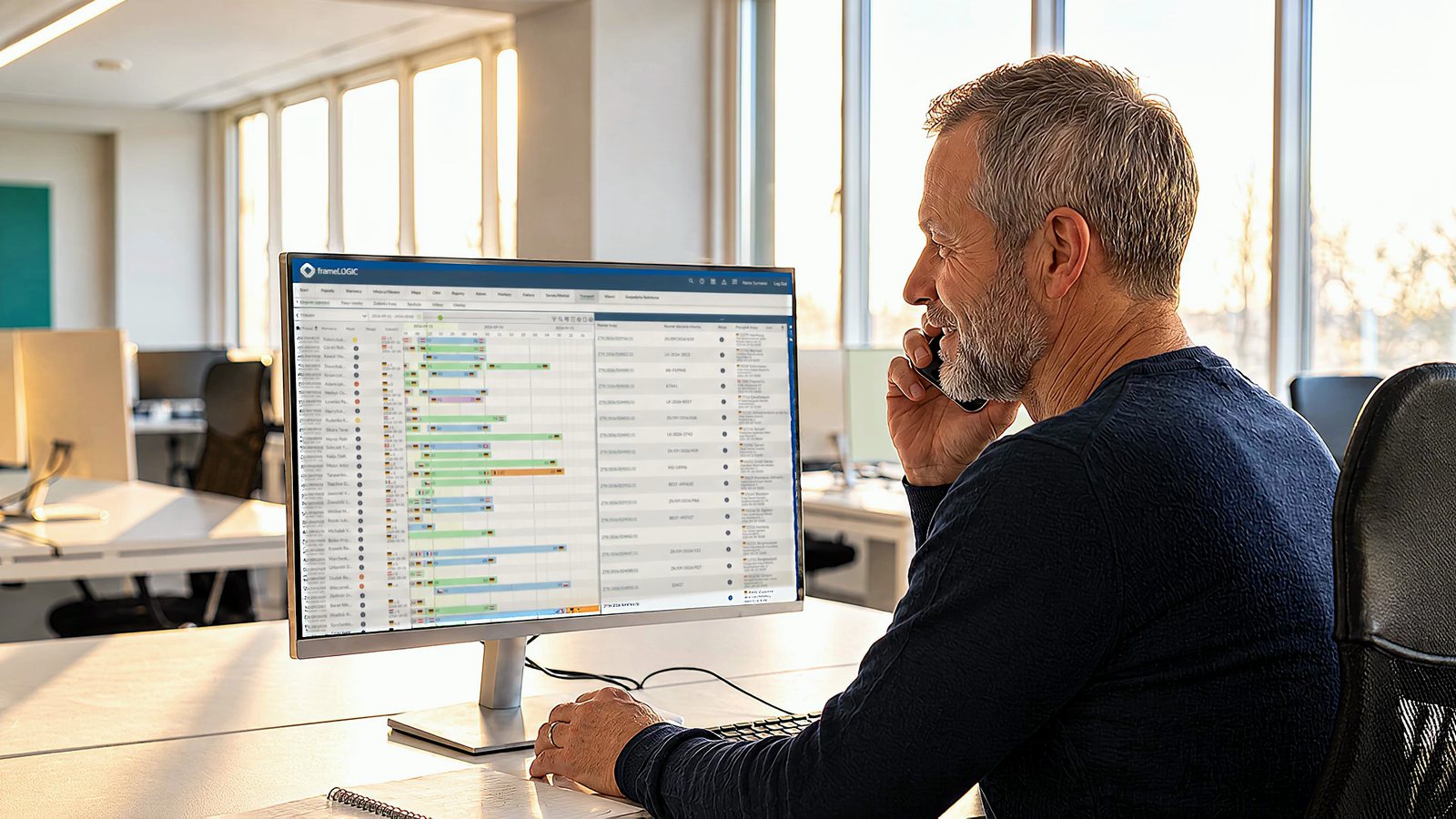
Orders, vehicles and drivers on one timeline.

  • The planning board shows who drives what and when. For every route, it also shows the country and the number of permitted cabotage operations remaining.
  • The customer's order number sits beside the scheduled loading and unloading times.
  • The same data is used to finalise the order and issue the invoice. Nobody enters it twice.
Order management
Vehicle and driver in one row Vehicle combination and driver, with the remaining cabotage allowance.
Planning board Each vehicle's routes on a timeline, including country and progress.
Route and customer order Order number with scheduled loading and unloading times.

Fleet and vehicles FMS

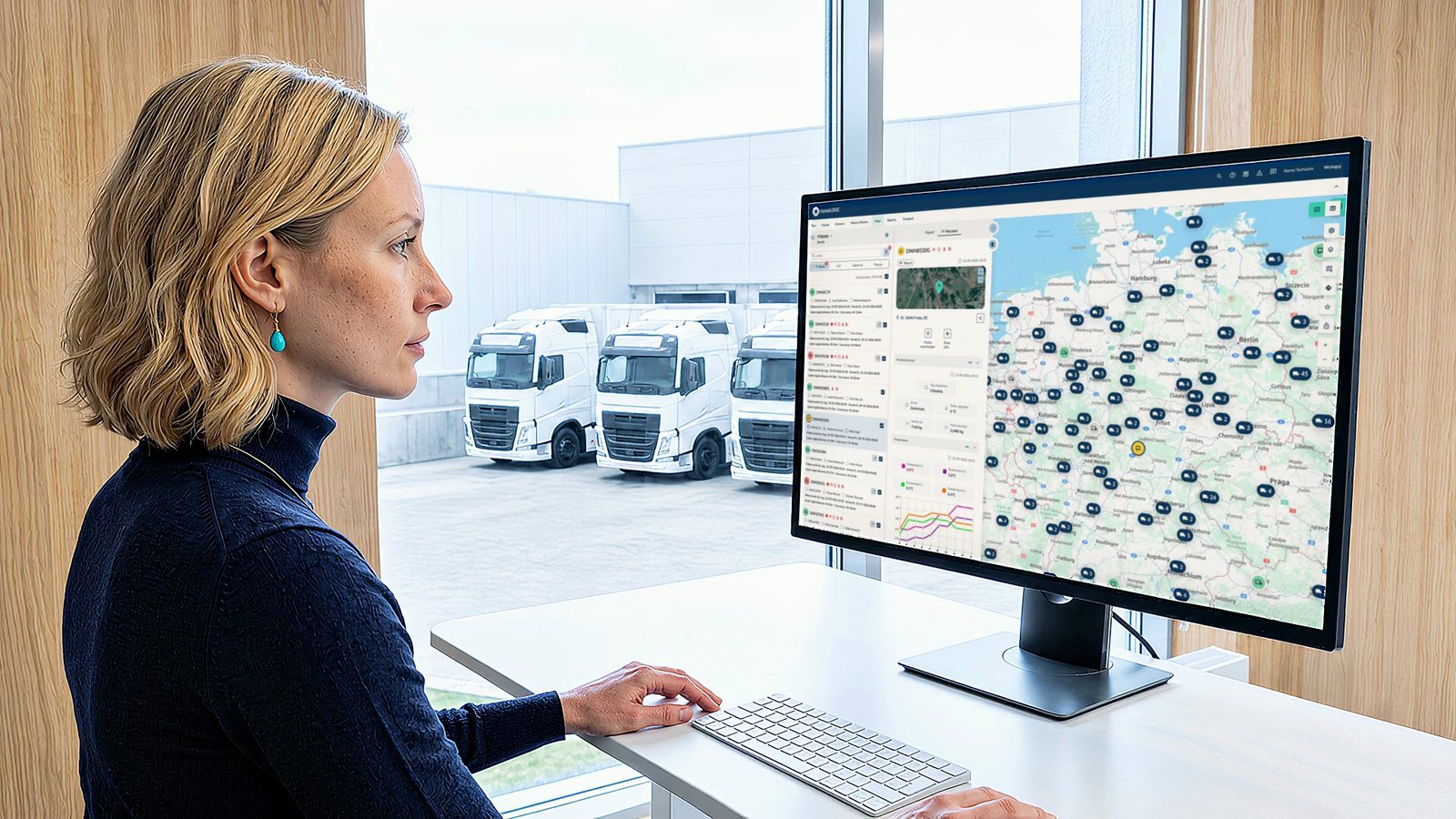
Vehicle location, the driver's remaining hours and the fuel level.

  • The map shows where each vehicle is and gives quick access to its trip history.
  • The driver's details include remaining driving time and required rest.
  • The vehicle panel keeps fuel level, temperatures and tyre status in the same place.
Fleet management system
Complete vehicle combination in one row Tractor unit, semi-trailer, two drivers and driving time.
Positions on the map Each marker shows how many vehicle combinations are at that location.
Vehicle panel Fuel, temperatures and tyres without leaving the map.

Video and safety ADAS · DMS

Footage provides evidence. Alerts help prevent incidents.

  • Every clip includes the time, location and speed, giving the reviewer the facts needed if a dispute arises.
  • ADAS and DMS detect tailgating, collision risk, phone use and drowsiness.
  • The safety score separates driving behaviour into categories, so coaching can address the specific issue.
Video telematics

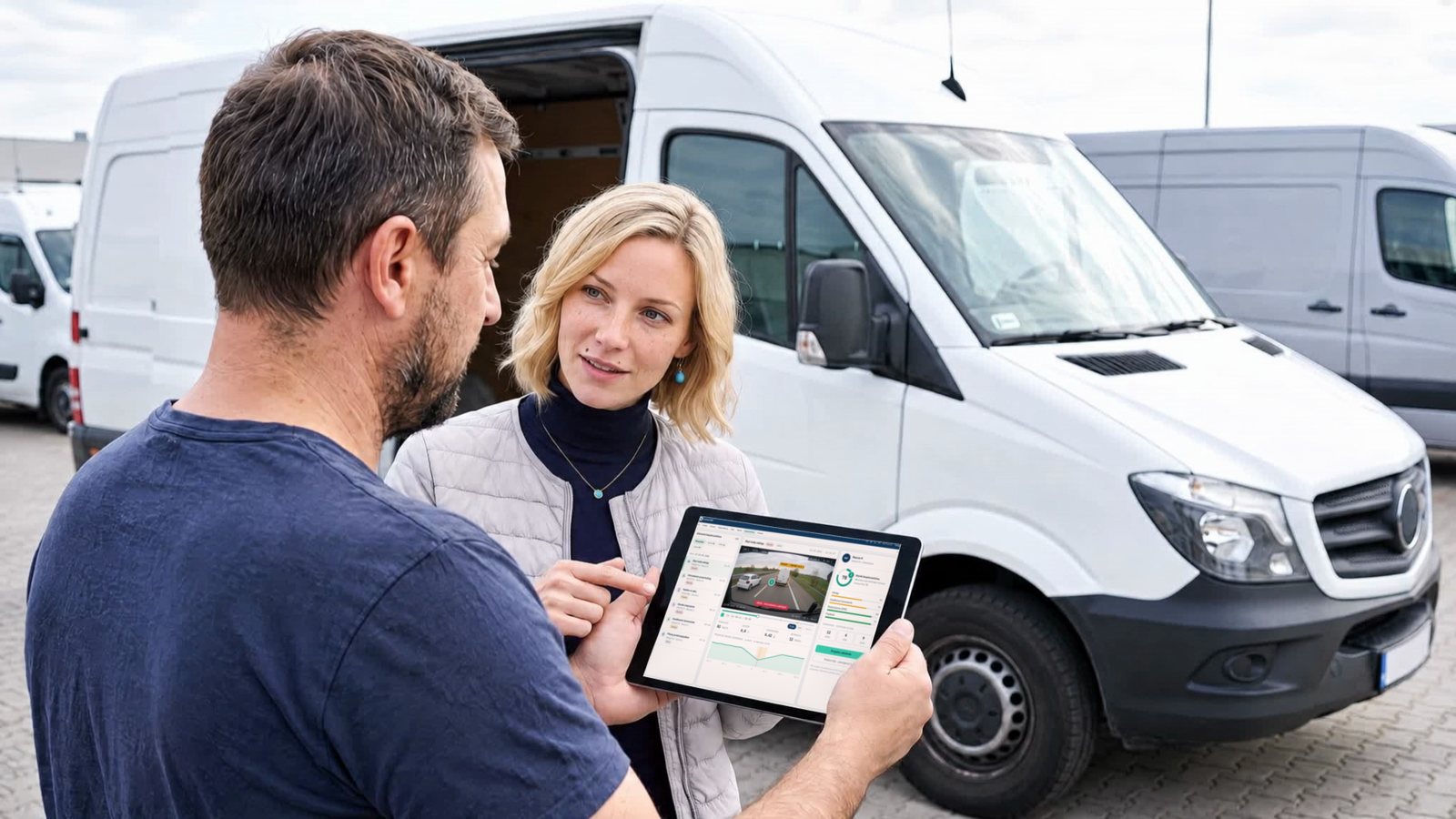
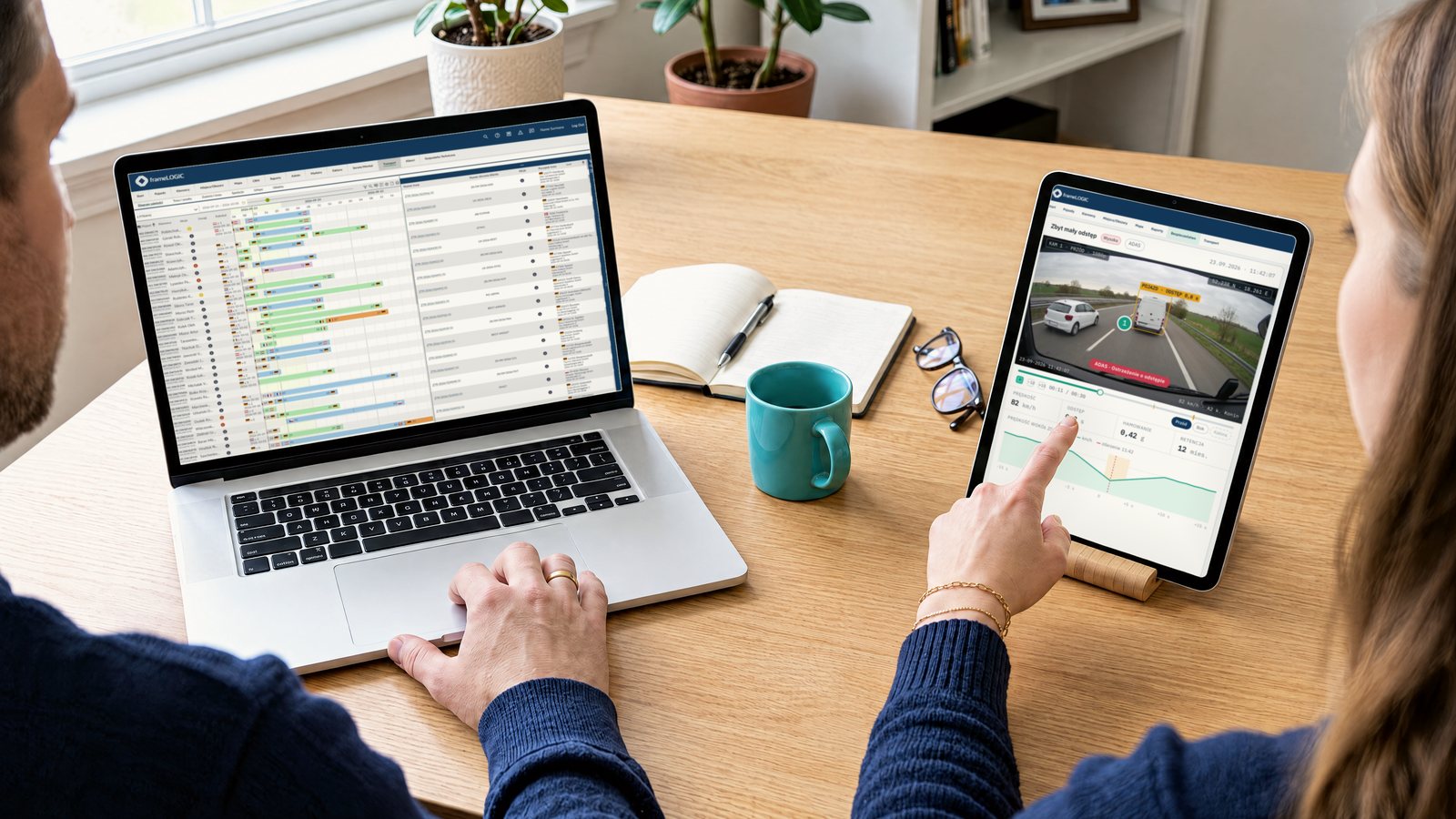
Prototype of the frameLOGIC video telematics event review screen. The left side lists ADAS, DMS and driving-behaviour events, with the vehicle, driver and severity for each one. In the middle, front-camera footage shows a motorway and a box around the van ahead. The following-distance reading is 0.8 seconds, while an overlay gives the time, position and speed. The player switches between front, side and in-cab cameras. Below it, a speed chart covers the period before and after the event. On the right, the driver's safety score is 78 out of 100. It is broken down into following distance, braking, distraction and speeding, with buttons to assign coaching and download the clip. The vehicles and drivers match those shown on the planning board in the TMS step.

Front camera footage A box marks the vehicle ahead and shows the following distance.
Driver safety score Following distance, braking, distraction and speeding.
The gap

The chaos is not in any one system. It is between them.

Every tool in the yard does its job. None of them hands the data on. What gets lost in the gaps is not just time. It is the mileage nobody billed, the document nobody attached and the trip nobody costed.

Hands holding a printed transport delivery note beside a keyboard, the same figures being retyped into the system on screen
AI-generated media
Orchestration

Orchestrating your most demanding workflows.

A real working day does not run one order, it runs the whole board at once. Then a border queue closes a motorway and the orders behind it are late, and their loads, their slots and their invoices with them. The system re-plans while the trucks roll: another vehicle, a shifted slot, a corrected ETA. The dispatcher approves the exceptions, and nobody rebuilds the day by hand.

See how planning works
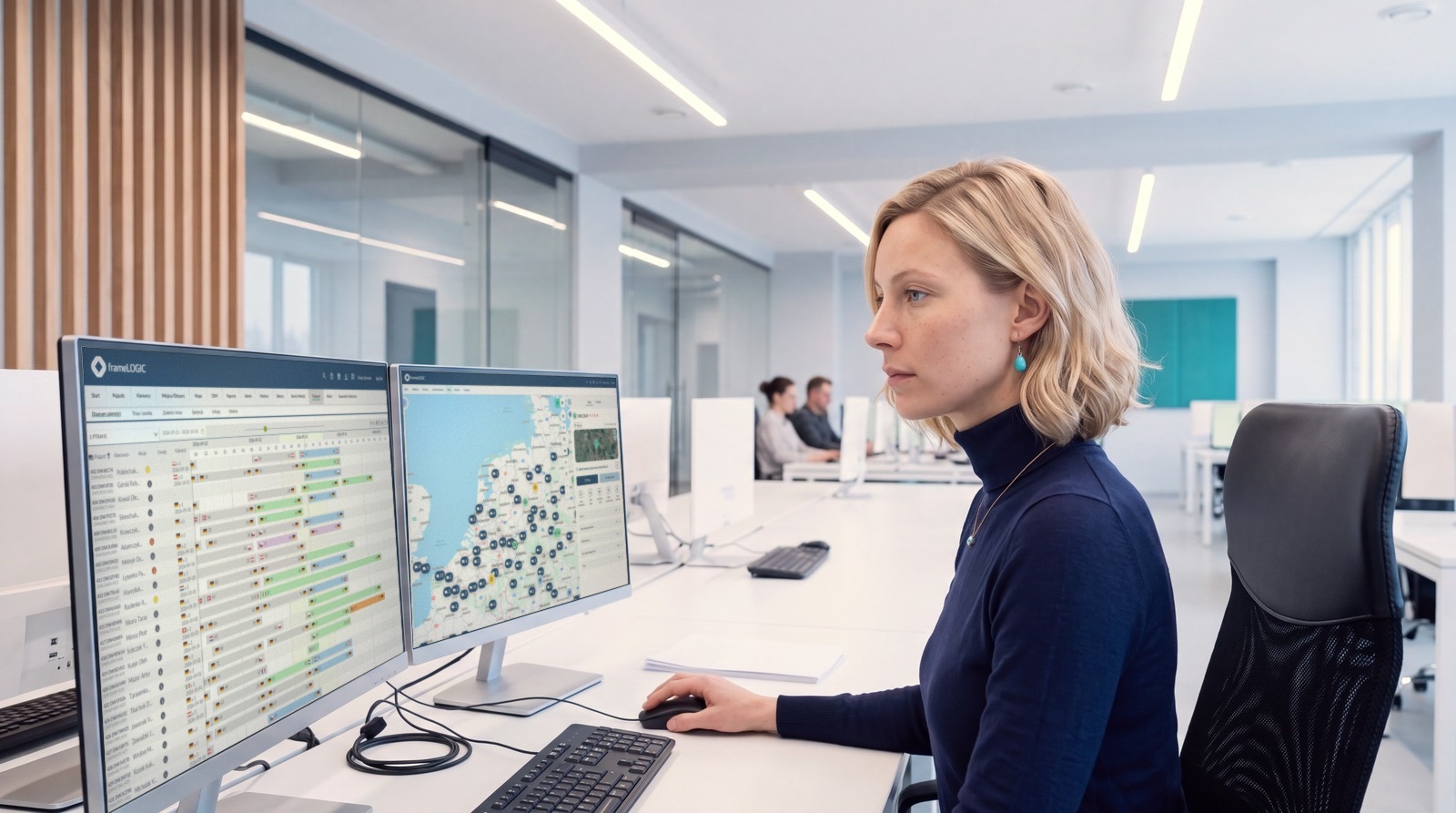
A dispatcher at two monitors showing a fleet map, seen from the side of the desk
AI-generated media

Three connections everything else rests on

  • 01

    Vehicles and assets meet the dispatch desk

    Trucks, vans, trailers, machinery and equipment with no power of its own all report into the same screen the dispatcher works on. One map, one availability view, one answer to where things are.

  • 02

    Every order carries a vehicle and a driver

    An order or a field task is not a row in a spreadsheet. It is paired with a specific vehicle and a specific person, and it stays attached to both through execution, evidence and settlement.

  • 03

    The result comes back as a number

    Cost of ownership against the vehicle, profitability against the freight, working time against the driver. The record that ran the job is the record the report is built from.

Map view

Vehicles, drivers and orders in one system.

The whole transport process runs in one place: vehicles, drivers, orders and everything connected with them. One system instead of several that have to be held together by hand.

See the fleet management system
Fleet map in the frameLOGIC system: a list of vehicles with alerts and driving-time limits on the left, a map of northern Europe with clustered vehicle markers in the centre, and a panel for the selected vehicle showing speed, position and operating parameters on the right.
Before we talk

The questions that come up first.

  • 01

    Do we have to replace every tool at once?

    No. Modules go in one at a time and connect to each other, and whatever stays on your side we connect through integrations. Starting with one area does not close the door on the rest.

  • 02

    What does the system do on its own, and what stays with people?

    The system calculates, proposes and watches deadlines. The decisions stay with people: the AutoPlanner proposes vehicle assignments and the dispatcher approves them; the system prepares the invoice and finance decides when it goes out.

  • 03

    Does this work for a mixed fleet?

    Yes. The same process handles trucks, vans, cars, machinery and specialist equipment, and an asset with no device of its own still exists in the system as a record with documents, inspections and deadlines.

Show more Show fewer
  • 04

    What is the difference between telematics and a TMS?

    An FMS controls the vehicles: monitoring, drivers and running costs. A TMS moves the transport process itself into one system: order planning, execution, invoicing and compliance. frameLOGIC runs both on a single platform, so order data and vehicle data reconcile without exports.

  • 05

    Who is behind frameLOGIC?

    The AddSecure Group, with experience in secure connectivity and fleet operations across multiple markets.

Had enough of ten systems that never talk to each other?

Each one does its job. None of them passes the data on. Book a free, no-obligation demo – we will walk one order from intake to invoice and show the points where data is still being retyped by hand. Thirty minutes, no slides about synergy.

Book a demo

AddSecure in Poland is now frameLOGIC

You arrived from the former AddSecure website. Our Polish transport and fleet management offering now operates under the frameLOGIC brand. The team, the platform and existing agreements stay the same.